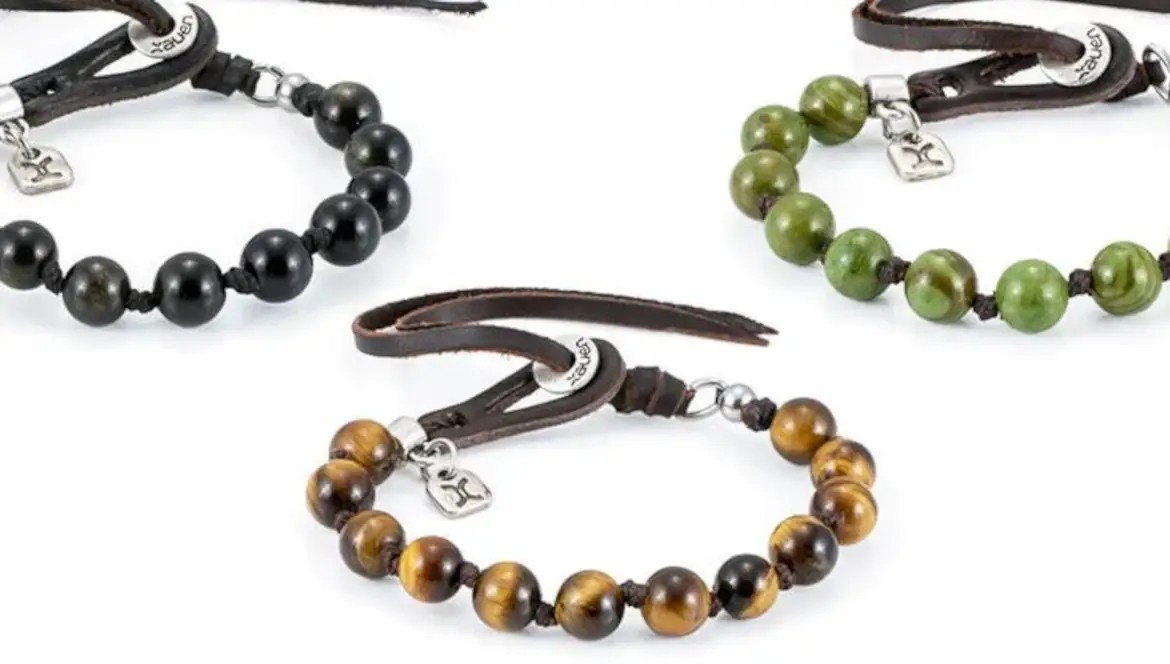

Meaning of the fishhook: adventure, patience, and the sea | Xauen Original
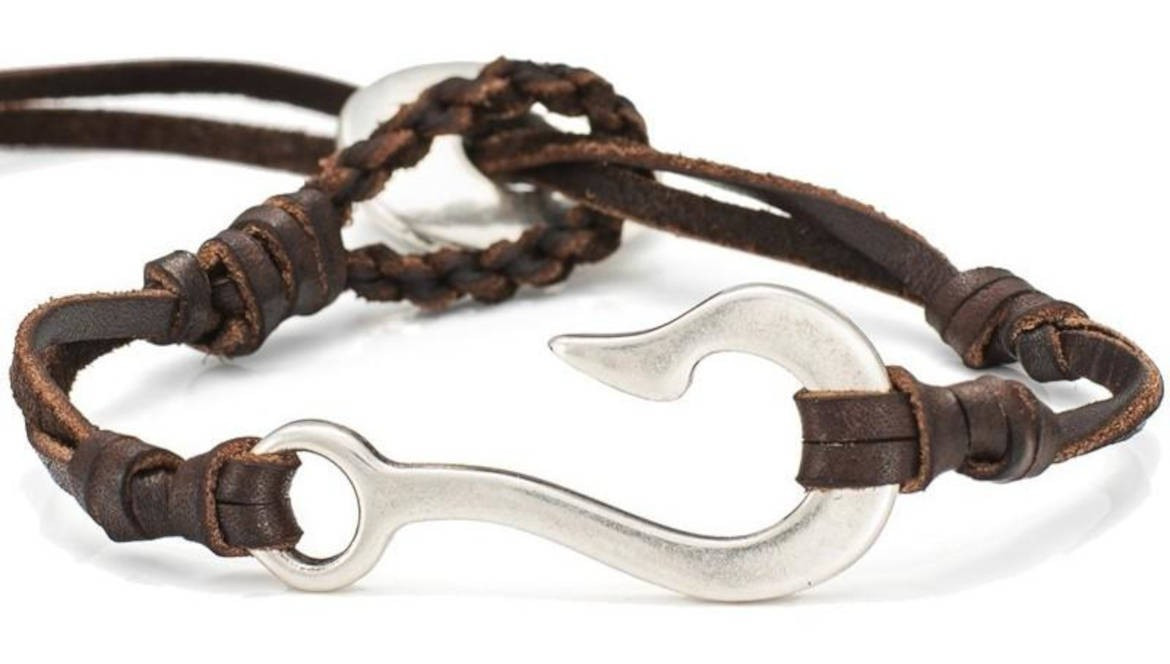
The fishhook symbolizes active patience and a connection to the sea. Discover its history in cultures around the world and the handcrafted leather bracelets that feature it as a central element.
The Meaning of the Fishhook: Adventure, Patience, and Connection to the Sea
The fishhook symbolizes adventure, active patience, and a deep connection to the sea. It is not the symbol of someone who waits idly by; it is the symbol of someone who prepares, casts, and waits with the concentration of one who knows that effort will be rewarded. In handcrafted leather jewelry, the wearer of a fishhook chooses life as the fisherman chooses it: calmly, skillfully, and without haste.
History and Origin of the Fishhook Symbol
The fishhook is one of the oldest objects made by humankind. Archaeologists have found bone and shell fishhooks in Upper Paleolithic sites dating back more than 23,000 years, from the caves of East Timor to the coastal settlements of the Iberian Peninsula. This makes the fishhook one of the first tools designed to deceive another living being—which carries enormous symbolic weight from the very beginning: the fishhook requires cunning, not just strength.
In the Māori cultures of New Zealand, the fishing hook (hei matau) is one of the most sacred symbols. Carved from whalebone or jade (pounamu), the hei matau represents prosperity, fertility, and safety on the water. Māori warriors and navigators carried it on their waka (canoe) journeys as protection and an amulet. Today, the hei matau is one of the most internationally recognized pendants with a peaceful inspiration, closely linked to surf and ocean culture.
On the Costa de la Luz in Cádiz, fishing has been the economic and cultural heart of towns like Conil, Barbate, and Zahara de los Atunes for centuries. The almadraba—the traditional tuna fishing method using a labyrinthine net, practiced for centuries on these coasts—is the most elaborate expression of the relationship between humankind and the sea in this region. In this context, the fishhook is not just a tool: it is the emblem of a way of life passed down from generation to generation.
Why the Fishhook Works as a Personal Symbol
The fishhook has a rare symbolic quality: it implies an active relationship with time. It is not the anchor that remains still, nor the arrow that flies straight to the target. The fishhook waits. It is ready, it is in the water, it is taut—but it waits. It is the symbol of someone who knows that good things take time and that impatience ruins the catch.
In contemporary jewelry, the fishhook frequently appears in surf and coastal cultures as a symbol of connection with the ocean, of respect for natural rhythms, and of humility before the uncontrollable. It is not a symbol of conquest but of listening. The fisherman does not dominate the sea: he learns to be in it.
The Fishhook and the Costa de la Luz: A Symbol of Here
If there was ever a place in Spain where the fishhook has authentic cultural roots, it is the coastline of the province of Cádiz. The tuna traps of Barbate and Zahara, the fishermen of Conil, the fish market of La Atunara in La Línea—these are scenes where the hook, the net, and the sea define family identities that have been passed down for generations. A handcrafted leather bracelet with a fishhook, made here, is not an imported symbol: it's truly from here.
The fishhook in the Zhanshi collection by Xauen Original
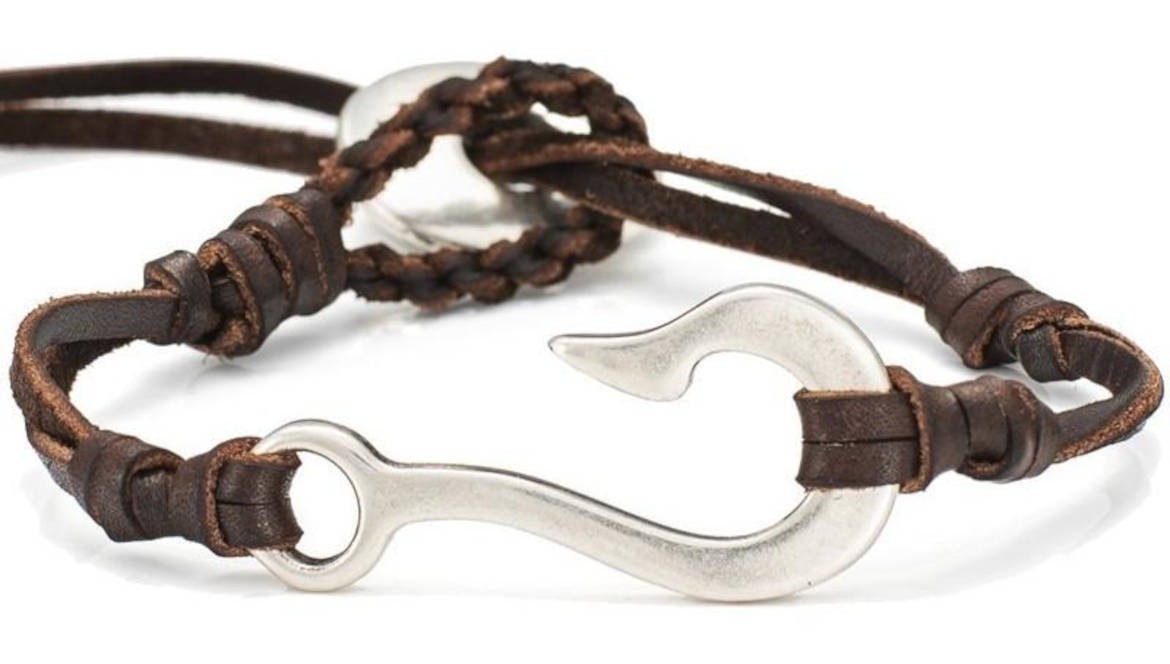
At Xauen Original, the fishhook appears in the Zhanshi collection—a line that operates on the philosophy that the central pendant is the sole protagonist. The Zhanshi IX design features a silver-plated metal fishhook nestled between strips of vegetable-tanned leather finished with knots, in a setting that lends it a simple and understated style designed to be combined with other accessories without competing with them.
The choice of Spanish vegetable-tanned leather as the base is not accidental. A material that matures with use, that develops character over time, that is never identical to another: it is precisely the kind of material chosen by those who value depth over appearance. The fishhook on vegetable-tanned leather speaks of patience, authenticity, and a genuine connection.
Frequently Asked Questions
Does the fishhook as jewelry relate to fishing or is it purely aesthetic?
It has both dimensions. The fishhook carries within it a history of fishing—patience, precision, and a connection to the sea—which many wearers incorporate as personal meaning, even without being fishermen. In surf cultures and coastal lifestyles, the fishhook is a symbol of respect for the ocean and a lifestyle in harmony with nature. Whether the wearer interprets it literally or metaphorically is up to them, not the object itself.
Why is the Maori fishhook (hei matau) so widely used in Western jewelry?
Because Maori culture encoded in the hei matau a meaning that resonates worldwide: a connection to the ocean, prosperity, and protection along the way. Global surfing popularized Māori aesthetics in the 80s and 90s, and the hei matau traveled with it. In handcrafted leather jewelry, the stylized fishhook shares that heritage, even though it doesn't replicate the traditional hei matau shape.
What is the difference between a fishhook and an anchor as symbols?
The anchor symbolizes steadfastness—stability, a point of support, firmness. The fishhook symbolizes the seeker—adventure, active patience, a connection with the unknown. They are complementary: the anchor says, "I'm staying here"; the fishhook says, "I'm continuing my search from here." In the Zhanshi collection by Xauen Original, both pendants are displayed together and are frequently given as gifts.
In Same Category
- Meaning of the gecko: luck, renewal and home | Xauen Original
- How to care for leather bracelets in summer: salt, sun and seawater | Xauen
- Best Leather Bracelets for Men 2026 | Xauen Original
- How to Choose Your Leather Bracelet: The Ultimate Guide | Xauen Original
- How to Care for Your Leather Bracelets: A Complete Guide | Xauen Original