
Meaning of the gecko: luck, renewal and home | Xauen Original
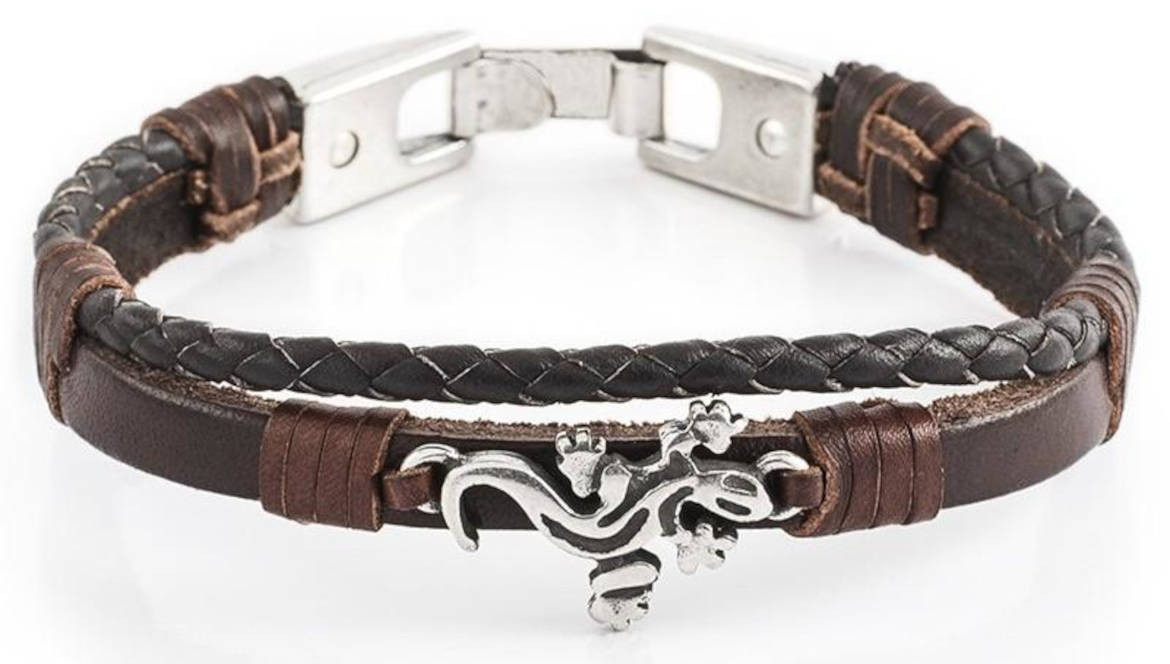
The gecko is one of the animals most laden with positive symbolism in the Mediterranean. Discover what it represents and the handcrafted leather bracelets that feature its image.
The meaning of the gecko: luck, renewal, and adaptation
If you have spent a summer in southern Spain, North Africa, or any Mediterranean coast, you are familiar with the gecko. That small, translucent-skinned reptile that appears on walls at nightfall, hunting insects under the streetlights, motionless for minutes and then swift as lightning. What you may not know is the amount of symbolism it carries.
From domestic reptile to spiritual symbol: the gecko in Mediterranean cultures
The common gecko (Tarentola mauritanica) is endemic to the western Mediterranean and North Africa. Its name comes from Taranto, the Italian city of Magna Graecia, which gives an idea of how long this animal has shared space with humans in the Mediterranean basin. And in that time, they have accumulated a remarkable number of meanings associated with it.
In Pharaonic Egypt, geckos were associated with good luck and protection. Amulets in their shape have been found in tombs and funerary offerings: they were believed to attract the protection of spirits and ward off evil. This tradition of the gecko as a protective animal spread to North African cultures, where it remains alive today in many Berber communities.
In medieval Arab and Islamic culture, the gecko received ambiguous treatment: some traditions considered it an animal linked to magic and best kept away from the house, while others saw it as a sign that the home was well-ventilated and free of dampness. In Al-Andalus, the culture that so greatly influenced southern Spain, the gecko was a familiar, everyday animal, whose presence on the walls of the house was interpreted as a sign that the space was healthy.
In Andalusian popular culture, the gecko has maintained a primarily positive reputation to this day. There is a saying that where there is a gecko, there are no cockroaches: and it is literally true, because the gecko is an effective insect predator. This practical function reinforced its image as a useful and welcome animal. In many towns in southern Spain, especially in Andalusia, having a gecko in the house is considered good luck.
Why the gecko is a talisman in Andalusia
Beyond its practical function as a pest controller, the gecko has several characteristics that make it a symbol of paramount importance for the cultures that observe it closely.
The first is its ability to regenerate. Like other geckos, the gecko can detach its tail when threatened—the tail continues to move to distract the predator—and regenerate it afterward. This ability to lose something without dying, and to recover it over time, has an obvious symbolic weight: renewal, resilience, the capacity to overcome loss. It is one of the most powerful symbols of the Mediterranean when it comes to overcoming adversity.
The second is its adaptability. The gecko lives in wall cracks, on roofs, under stones, in trees, and inside houses with equal ease. It doesn't need ideal conditions: it adapts. In a world where rigidity is often punished, the gecko represents the virtue of finding the possible path, not the ideal one.
The third, and perhaps most culturally valued, characteristic is that the gecko doesn't flee from humans. Unlike most reptiles, which avoid contact with people, the gecko naturally coexists with us. It allows itself to be observed. This proximity makes it one of the few reptiles that generates widespread sympathy rather than rejection, and this sympathy has translated into consistently positive symbolism throughout the centuries.
In the popular imagination of Cádiz and the Costa de la Luz, the gecko is synonymous with summer: it appears on warm nights, under the lights of beach bars, on the white walls of villages. For those who come year after year to spend their summers on this coast, seeing it is almost a welcoming ritual. For those of us who live here, it is simply part of the summer nightscape.
The Gecko in Traditions of Personal Renewal
The gecko's ability to regenerate its tail has made it a symbol of personal renewal in many traditions. Just as the animal loses something without losing its life and recovers it over time, the gecko represents, in jewelry and amulets, the idea that it is possible to start anew after a loss.
This interpretation resonates particularly strongly in contexts of life change: a new job, a long trip, the end of a relationship, the beginning of a new chapter. Wearing a gecko in handcrafted jewelry at such times serves as a reminder that loss and renewal are two sides of the same coin.
In the Māori and Pacific Islander context, the gecko—a zoological cousin of our Mediterranean gecko—carries a similar symbolic weight, but with an emphasis on night vision and spiritual protection. Māori geckos are associated with ancestors and the ability to see what others cannot. This tradition shares with the Andalusian one the core theme of protection: the gecko watches over its own.
When we at Xauen Original decided to include the gecko in our catalog, it wasn't an arbitrary decision. We live and work in Conil de la Frontera, where the gecko is a constant presence on summer nights. Choosing it as our motif was a way to incorporate something genuinely ours into the catalog, something from the region where we manufacture, with a symbolic weight rooted in the same cultures—Andalusian, Berber, Mediterranean—that give our brand its name and meaning.
The gecko in the Xauen Original catalog
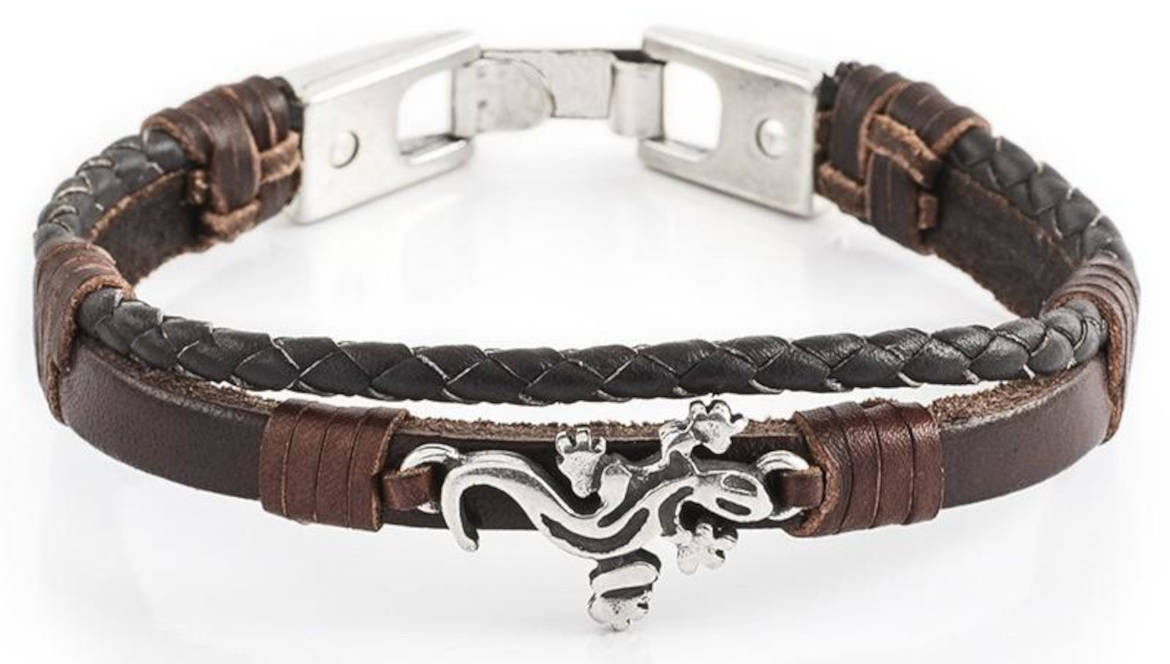
The Xauen Original bracelet featuring the gecko is part of a collection that combines Spanish vegetable-tanned leather with silver-plated zamak pieces. The gecko—with its four legs extended in its characteristic wall-climbing position—has a strong visual presence without being overwhelming: its silhouette is unmistakable, and its moderate size allows it to work well in both minimalist designs and bracelets with more elements.
The piece is available in the Tupu men's bracelet collection. The Tupu VII men's leather bracelet features a silver-plated metal gecko. It's one of those figures that works in very different contexts because its symbolism is universal enough.
If you're looking for a gift with real meaning for someone who values renewal, adaptation, or a connection to the Mediterranean, a bracelet with a gecko and vegetable-tanned leather has exactly that significance: it's not just generic decoration; it's a symbol with history and roots in the very region where it's made.
FREQUENTLY ASKED QUESTIONS
What does the gecko mean as a symbol of good luck?
In Mediterranean and Andalusian cultures, the gecko is associated with home protection, good luck, and the health of the space. Its presence in a house is considered an indication that the place is healthy and well-ventilated. Its ability to regenerate its tail also makes it a symbol of renewal and personal resilience.
Are the gecko and the wall gecko the same symbol?
They are different animals from the same family (Gekkonidae) with similar symbolism but with cultural differences. The wall gecko (Tarentola mauritanica) is Mediterranean and has its own symbolic tradition in Spain, the Maghreb, and the Mediterranean. Pacific geckos, especially in Maori culture, share the emphasis on renewal and protection but with interpretations specific to that tradition.
Can a gecko bracelet be given as a good luck charm?
It's a gift with deep meaning, especially for people with ties to the Mediterranean, southern Spain, or those going through a period of change or renewal. The gecko, as a symbol of resilience and adaptation, has a contemporary interpretation that perfectly aligns with what many seek in handcrafted jewelry: not just aesthetics, but a real, explanatory meaning.
In Same Category
- How to care for leather bracelets in summer: salt, sun and seawater | Xauen
- Meaning of the fishhook: adventure, patience, and the sea | Xauen Original
- Best Leather Bracelets for Men 2026 | Xauen Original
- How to Choose Your Leather Bracelet: The Ultimate Guide | Xauen Original
- How to Care for Your Leather Bracelets: A Complete Guide | Xauen Original